
Training
How SUC Trains for Ultramarathons in Sacramento
Sacramento is flat, the races are not, and that can actually produce a very good ultramarathon training week.

One of the weird things about ultramarathon training in Sacramento is that most of us do not live anywhere near the terrain we are training to race. We spend the week on flat roads, bike paths and levees, then drive to Auburn on Saturday and ask our legs to handle several thousand feet of climbing.
I used to think of the flat running as something we had to work around. Now I think it is one of the advantages of training here, as long as the week is organized correctly.
Road running gives us a place to build real aerobic volume and running economy without every mile carrying the recovery cost of a technical trail. The foothills are close enough for the specific work. Put those together with strength and one focused faster session, and you have most of what a trail runner needs.
Why I still care about speed
Ultrarunners love to talk about vert, hiking and time on feet. Obviously those things matter, but newer ultra runners often have more to gain by improving the pace they can hold comfortably on runnable ground.
Most California trail races are not one continuous mountain climb. They have fire roads, rolling singletrack, flatter connectors and long sections where being able to run efficiently makes a huge difference. Your baseline aerobic pace affects much more of the day than your ability to crush one steep hill repeat.
That is why Team SUC keeps strides and faster running in the schedule. Tuesday strides are usually around six by 20 seconds inside an easy run. They are short enough that they should not create much fatigue. The point is posture, cadence and touching a faster rhythm without making Tuesday another hard day.
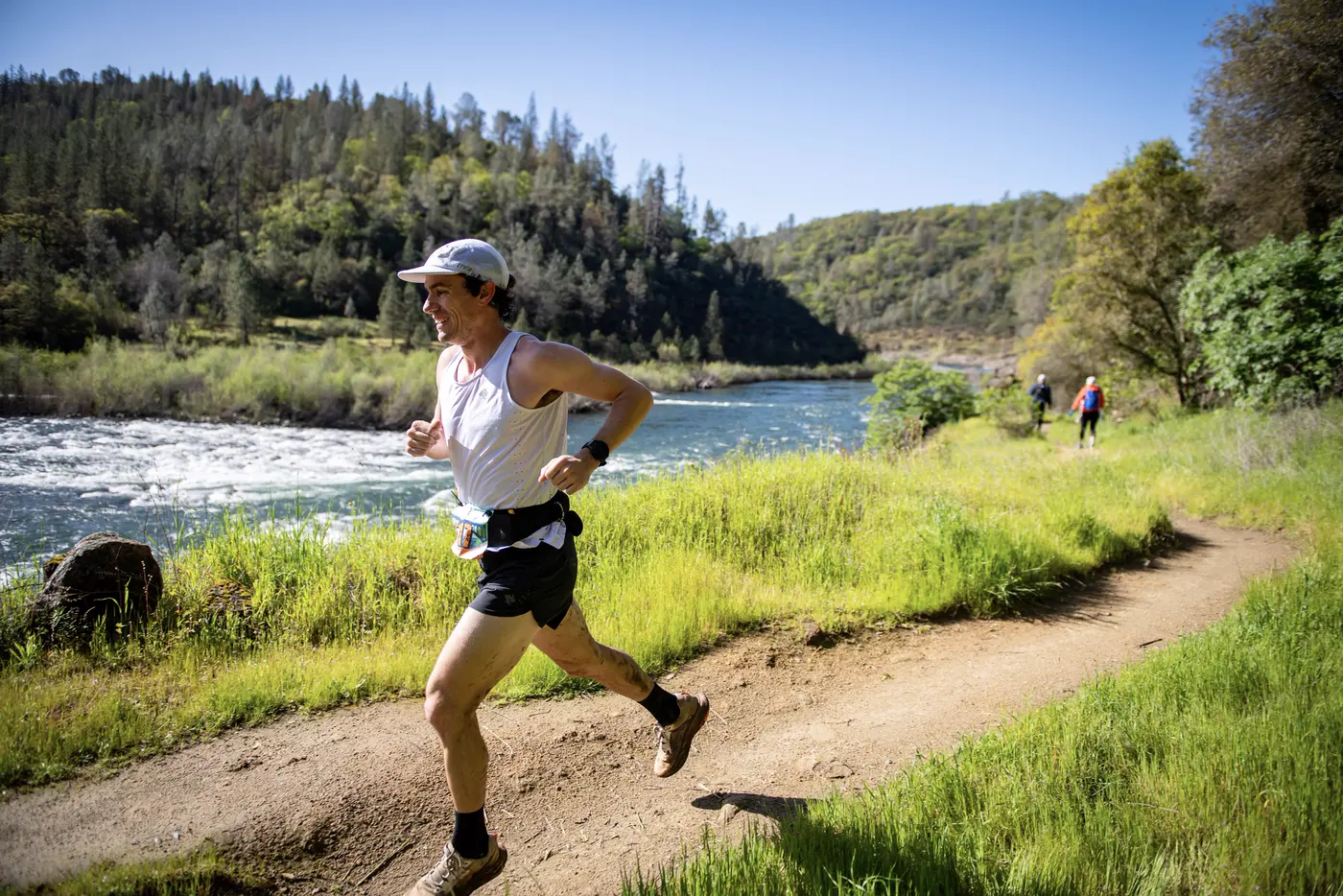
Wednesday is where the real quality session lives. We rotate intervals, hills, threshold work and other sessions based on the training block. The workout is hard, but the total volume stays controlled, generally under an hour and 20 minutes. The number of repetitions can change depending on the runner and how the week is going.
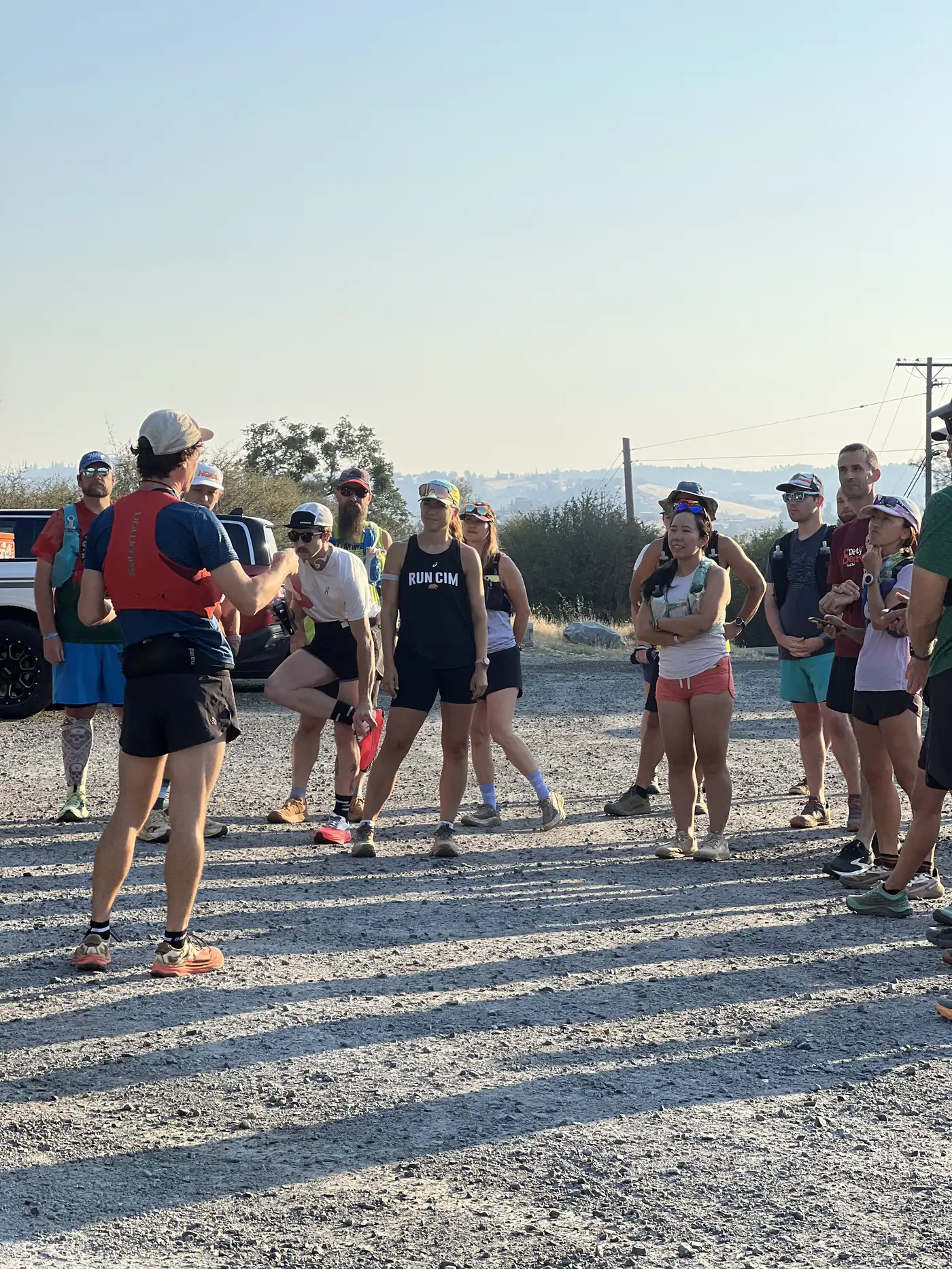
I care more about protecting Saturday than proving something on Wednesday night.
The weekly structure
The exact workouts change, but the rhythm stays familiar:
Monday: Rest, recovery or mobility after the weekend.
Tuesday: Easy aerobic running, short strides and strength when appropriate.
Wednesday: The main interval or hill workout. This is a public workout and runners can adjust the number of repetitions.
Thursday and Friday: Easy running, mobility or rest so the legs come back around.
Saturday: The primary trail long run and the most specific session of the week.
Sunday: Recovery or a second aerobic run for athletes who actually need back-to-back work.
This structure is simple on purpose. A lot of runners get excited and build a week where every day sounds productive: hills, heavy lifting, tempo, another hill day, then a huge weekend. It may work for a couple of weeks. Eventually the Saturday long run becomes a shuffle because the runner arrived already cooked.
Saturday is where we practice the things that decide ultramarathons. We work on pacing, fueling, hiking and the ability to stay useful after several hours. During race-specific blocks, the route may cover the actual course. That session deserves fresh enough legs to learn something.
Training for hills when your neighborhood is flat
You do not need to drive to Auburn every day. I would rather see someone run consistently from home than spend half the week chasing elevation and missing sessions because the logistics are annoying.
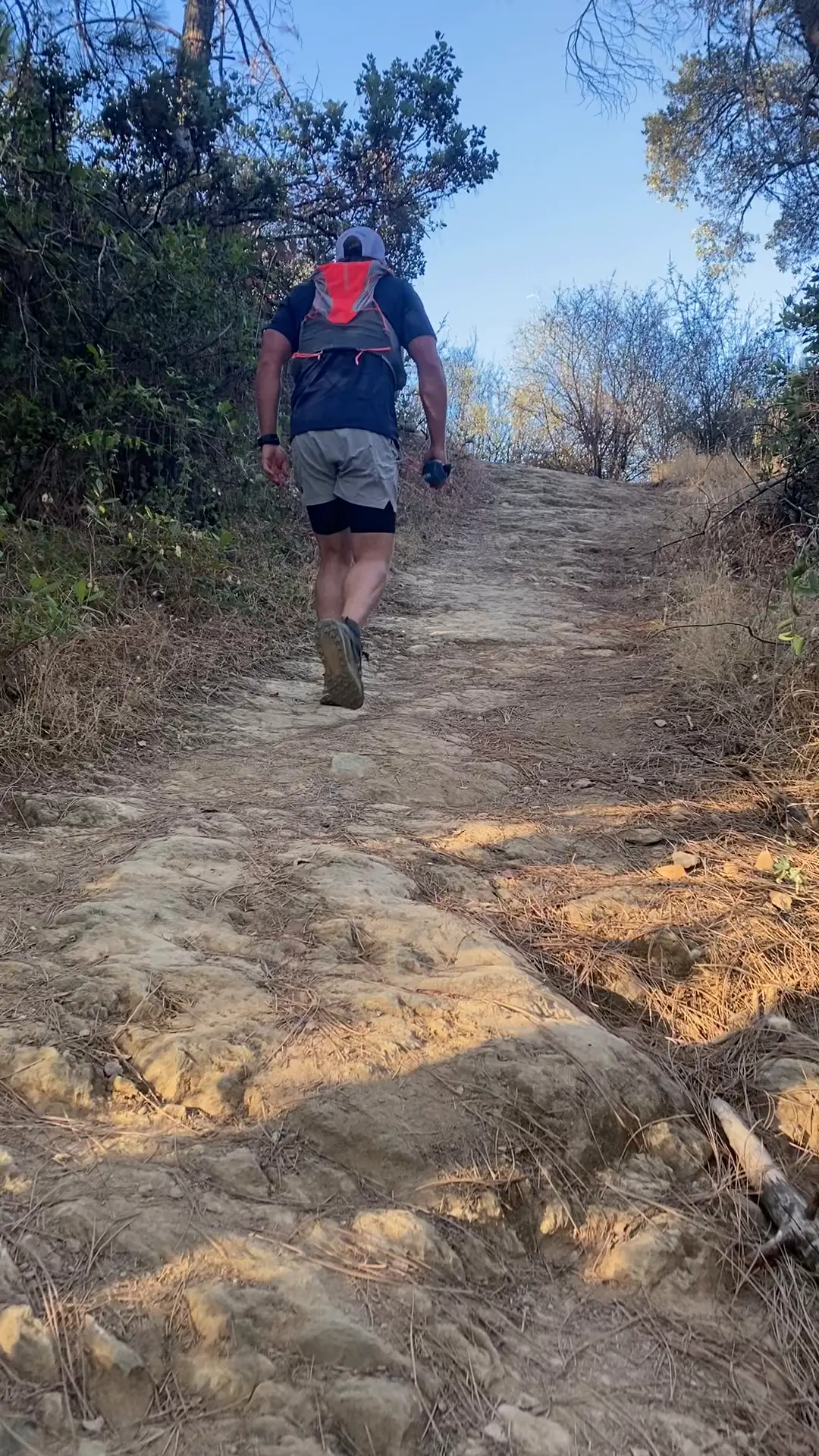
We use weekday hill repetitions when the block calls for climbing power. Treadmill hiking can be useful. Strength work builds the calves, hips, ankles and single-leg control that climbing and descending demand. Then the weekend provides the longer exposure that is hard to fake in town.
Hiking needs practice too. In a steep ultra, good hiking is part of the race plan. Waiting until you are exhausted to walk does not teach you how to hike efficiently. Use long runs to work on the transition while you still feel good enough to pay attention.
MED, LRG and XL are workload options
Team SUC has MED, LRG and XL plans because runners can share the same training focus without sharing the same mileage.
MED is generally the right place for base building, newer ultra runners and many 50K goals. LRG serves experienced 50K runners and athletes moving toward longer events or more volume. XL is built around higher-volume 100K and 100-mile preparation.
Those are not permanent labels. If work becomes chaotic, recovery falls apart or a small injury starts talking, drop down. If the current workload has been comfortable for several weeks and there is a reason to add more, then we can talk about moving up. Finishing the biggest plan is not the goal. Arriving at the race healthy and prepared is.
What Saturday should accomplish
I do not judge a long run only by mileage. I want to know what it was supposed to teach.
A runnable Folsom Lake day may be about holding a steady aerobic pace and eating on schedule. A canyon route out of Auburn may focus on hiking and downhill durability. During Project RDL, many of our Saturday runs are on the Rio Del Lago course because course knowledge is part of the training.
Sometimes the smartest option is the shorter route. If you are dragging through the first half and the only reason to continue is that XL sounds cooler than LRG, adjust. Long-term consistency builds much more fitness than repeatedly turning one Saturday into a recovery emergency.
Sacramento is a good place to become an ultrarunner
We have flat ground for efficient mileage, summer heat whether we ask for it or not, and the American River canyons close enough for specific long runs. We can reach altitude in the Sierra and technical coastal terrain without rebuilding our whole lives around training.
The ingredients are already here. The main job is putting them in the right order and repeating the week long enough for the work to add up.
If you want to follow this structure with the crew, read more about Team SUC. If your schedule, injury history or race requires an individual plan, you can also look at 1:1 ultramarathon coaching.